Things to know - restoration playing fields of old pinball machines
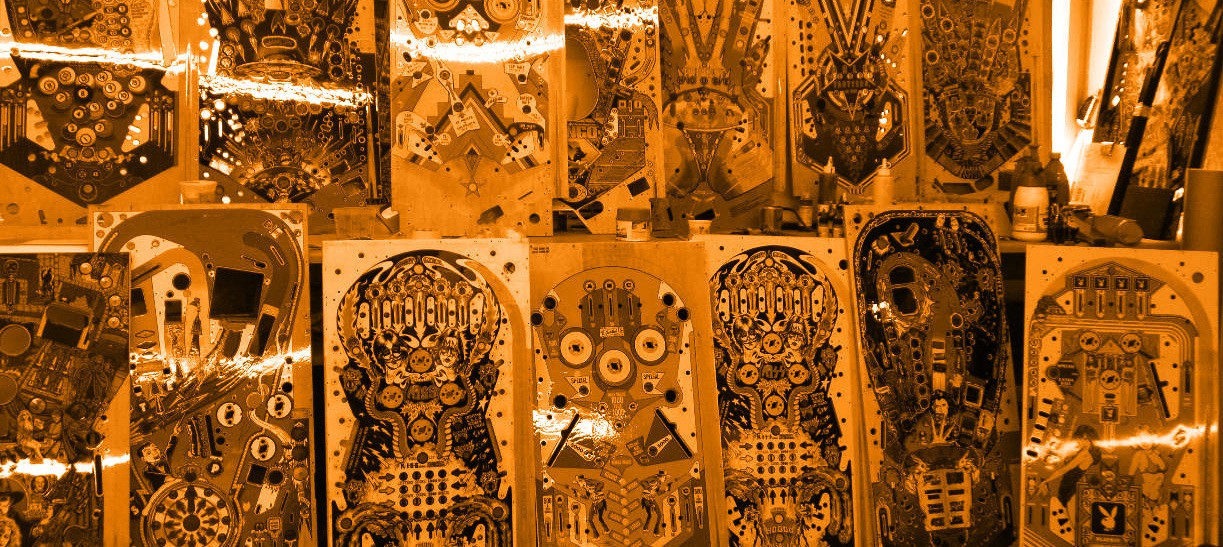
We are specialized in playing field restorations using airbush technique and brushes. In the following, we will give you an overview of our working methods and want to give you a feeling of how much work really goes into restoring a playing field to a new condition.
How far must the pitch be dismantled ?
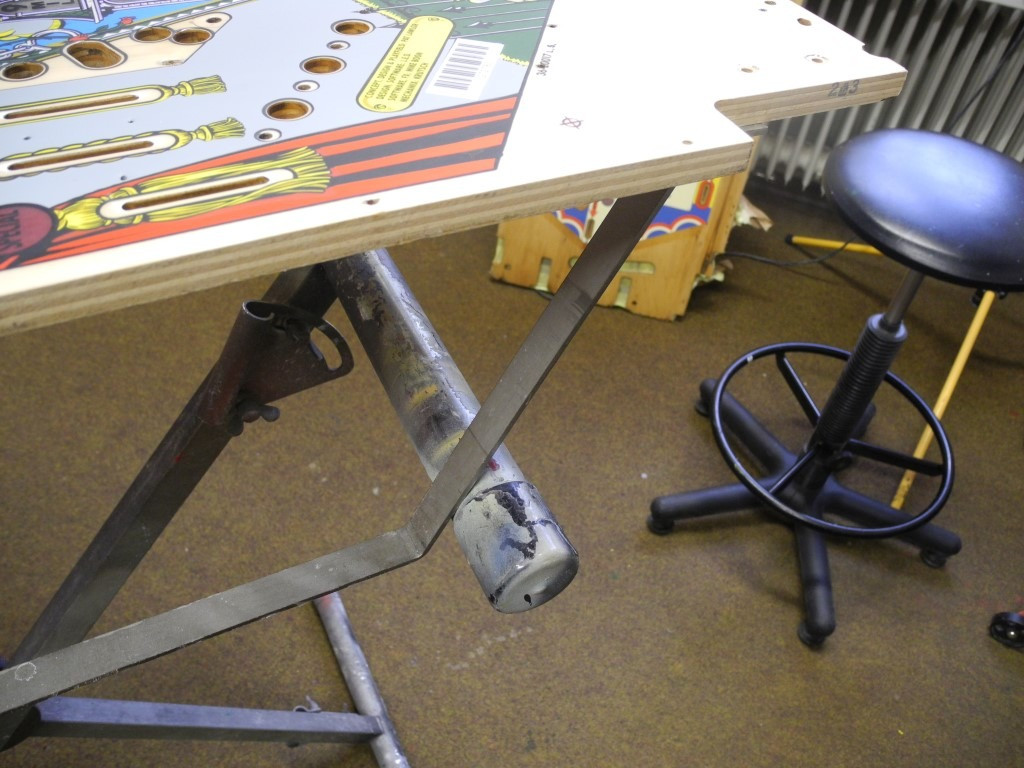
Of course, it is best for handling when the playing field is completely empty. This also has the great advantage that the underside of the playing field can be processed accordingly (sanding or, if necessary, repainting in gray - depending on the type of playing field).
Many customers shy away from this effort, because it is of course much more difficult to rebuild the playing field afterwards. Therefore it does not have to be. So that nothing happens to the superstructures under the playing field during the processing, we have had U-profiles made of stainless steel, which are simply screwed under the playing fields and fit perfectly into our painting stands.
Shipping
If the playing field is completely empty, we recommend first wrapping the playing field in brown packing paper and only then protecting it with bubble wrap. Info bubble wrap: this contains acid that can react with paint, so please do not use bubble wrap in direct contact with the playing field. Then protect the corners of the playfield with cardboard corner cushion and then pack it with carton. Shipping by mail or courier service no problem.
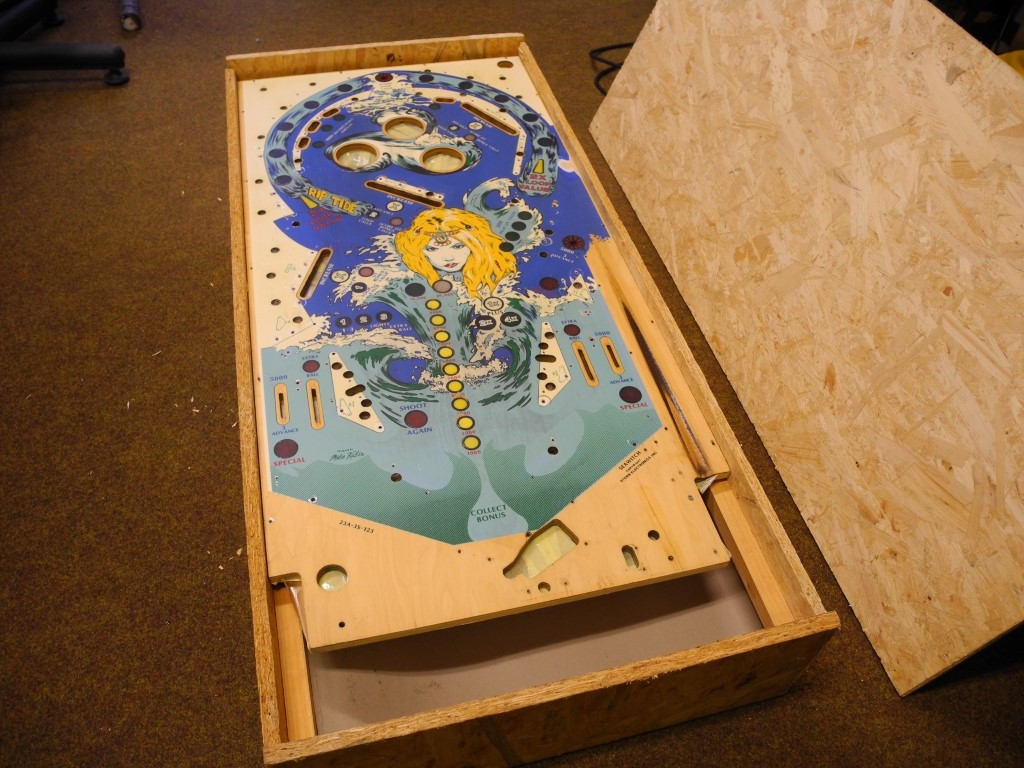
If the playing field is still partially assembled, we recommend building a simple wooden transport box. The material for this is already available for 20-30 euros in any hardware store. Simply measure the playing field and construct a simple, precisely fitting box. Then, in each of the 4 corners and in the middle of the playing field, attach small bars (simple wooden blocks) that serve as a support. Insert the playing field and screw it to the wooden blocks. Fill the top with filling material and screw the lid. So we get playing fields from all over the world. Shipping by courier service is no problem.
Info varnish:
We have all been playing pinball for many years. We know how a pinball machine should play, how the ball should run. With all the fascination for the beauty of a restored and painted playfield - one thing is of crucial importance: the original play feeling of the pinball MUST be preserved. A great look is of little use if the ball has no friction at all, becomes uncontrollable and eventually just slides across the playfield. Therefore, we use a special industrial, very high quality paint, which conveys exactly this original feel and is not too hard.
Number of paint coats:
The answer to this question is quite simple: as much as necessary to obtain a perfect, even surface, but as little as possible. It is simply counterproductive to apply a thick coat of varnish, as a lot of varnish also gives a lot of room for dents to form. We usually varnish our boards 4-6x with 3 coats each (cross coats). This results in approximately 12-18 coats of varnish. However, after each coat is cured, it is sanded down to the lowest level before the next coat is applied - so we build up the varnish layer by layer until the playing field is level.
Info "Denting":
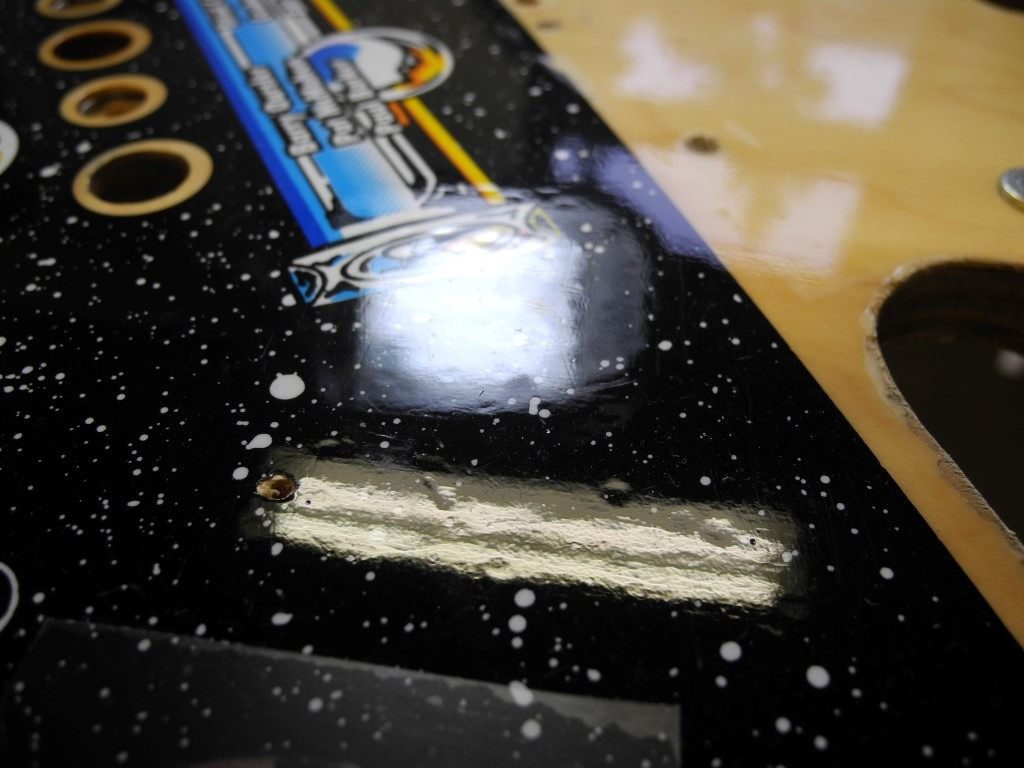 A topic that is discussed again and again is the formation of dents in the varnish. As described above, the varnish must have a certain flexibility so that it a. does not crack and b. the original feel is preserved. Whether or not dents in the varnish occur over time depends largely on the wood underneath. If this wood is very soft, there will inevitably be dents, since the varnish is flexible as described and adapts to the surface. After all, there is a lot of mechanical stress here when a steel ball falls on wood. This cannot be prevented and if you take a closer look at original playing fields, they are littered with small dents, in many cases so many that the sum of the dents makes the playing field appear even and flat again. However, these dents are only visible at a certain angle and when looking very closely. They cannot be felt. We do not want to give the impression that there are real holes in the paint - it is more a purely optical phenomenon when viewed against the light at a certain angle.
Install Protector - Yes or No ?
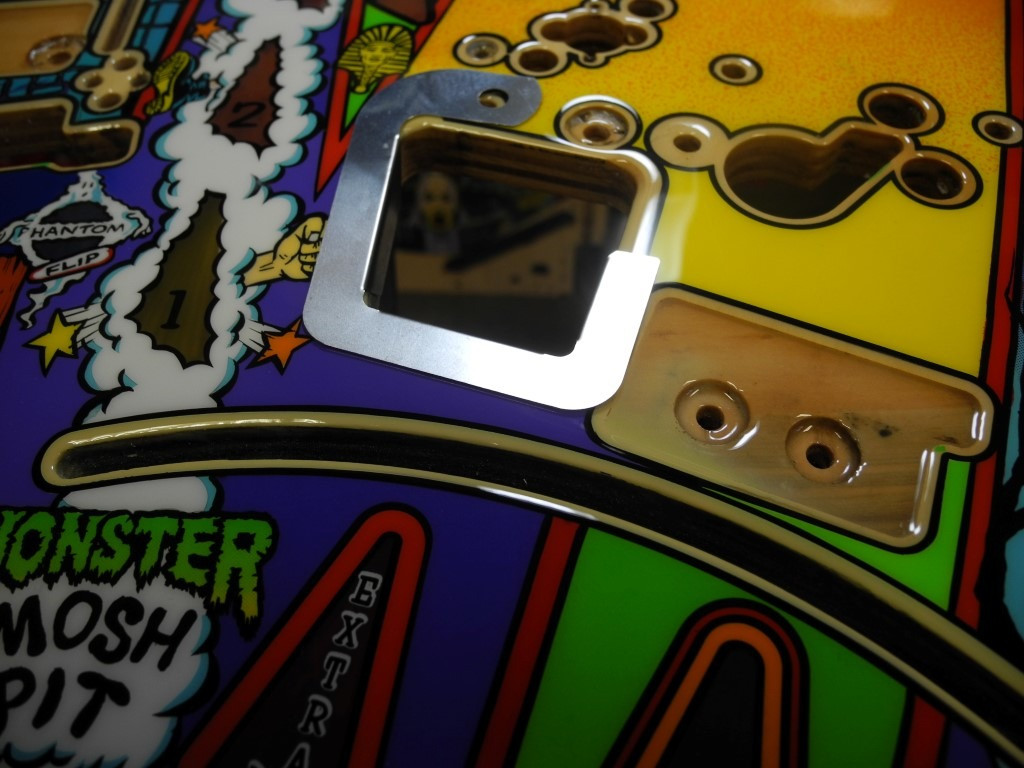
Should I now install a protector on heavily used areas of the playing field that were filled by us ? This question answers itself. In places where solid wood has already been worn away and damaged over time, a subsequently applied material may not hold permanently.
We strongly recommend installing a protector. We simply cannot give any guarantee that no new damage will occur here. Info: we have seen pitches that were not protected by a protector and have already had thousands of games behind them - all of them looked like the first day.
But again we would like to emphasize that we can NOT guarantee this and can not take any responsibility for it.
"Air pockets" in the inserts (plastic inserts on the playing field).
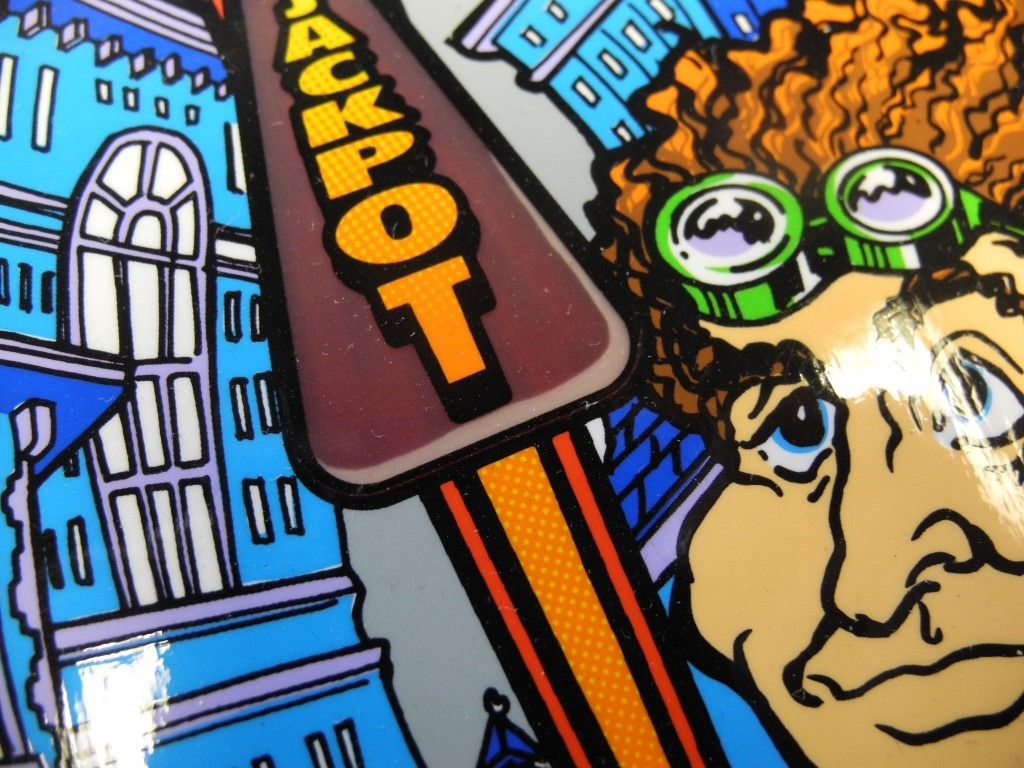
This is also a common problem that we often address. By way of explanation, the playing fields used to be produced using screen printing technology. This is also how the lettering was printed on the inserts. However, before the actual lettering, an intermediate layer was applied to the insert - a kind of primer / adhesion promoter. This was usually somewhat milky, which was also quite intentional. In the course of time and through many environmental influences it can happen that parts of this coating detach and the inserts "draw air" which then looks like white bubbles in the inserts. If this damage is already visible during restoration, we usually replace the inserts as a precaution. The insert is removed, ground down and glued flat again. The insert decals are renewed whenever possible using spray stencils and airbrush. We try to avoid gluing whenever possible to minimize the risk. Sometimes, however, we have to glue decals - here it "can" happen that the glue loosens a bit due to heat in the course of the year and air enters the inserts from BELOW. This is out of our hands and is unfortunately sometimes common.
Another reason for the phenomenon lies in the nature of the materials of a playing field. Here, very hard plastic is embedded in much softer wood. This "sandwich" is painted which changes the surface tension. Due to e.g. mechanical stress or heat, small hairline cracks can appear at the joints of the materials, which are then visible as a milky (white) layer.
These phenomena cannot be influenced by anything. It can simply happen and cannot be prevented.
Can we also restore "just a little" ?
We are often asked if we can simply restore playing fields a little. "You can't see that" (...) "those spots don't really matter to me" (...). The answer is: unfortunately we don't do that. We have the claim to ourselves to deliver unique, as perfect as possible works. What has been restored by us should meet our standards. We therefore ask for your understanding that we do not do "half" things and must unfortunately reject these requests in principle.
Maintenance of the playing field:
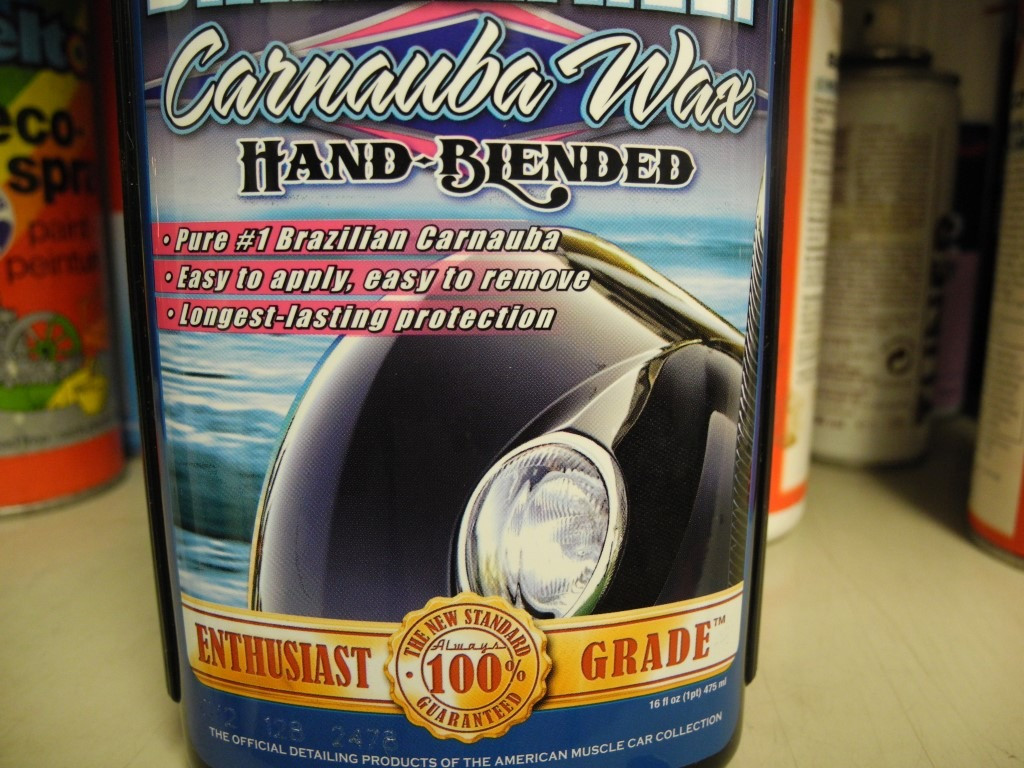 We recommend treating the playing fields exclusively with pure carnauba wax. This is a natural product and contains no silicones, nanocoatings or anything else. The application is very easy and comparable to car care: Apply a thin layer of wax with a soft cloth, let it dry for about 30 minutes and then polish it with a polishing cloth (from car care). Please do not use any other materials, as these will inevitably resinify over time and virtually attract the dirt.
Delivery times:
Many customers are surprised when they hear that a pitch repair can sometimes take 6 months. This is very easy to explain: anything that accelerates the drying of the paint (high temperatures, infrared lamps) is, in our view, completely counterproductive and carries the risk that the paint will flake off. A very good quality work takes time. You have to give the materials the time they need. As a rule, we let the paint cure for at least 12 days at normal room temperature between the individual coats before we work on it again. With approx. 6 lacquering operations, this alone results in 10-12 weeks of waiting for the lacquer to dry. In addition, one must take into account these works a high craftsmanship and also artistic standards. No pitch here is like the other. Everything is done by hand and that takes time.
Prices:
Prices depend on several factors:
- Original condition of the playing field
- The actual motive of the playing field
- The preparatory work to be done
- Are inserts to be renewed ? If we have to renew inserts, of course, the preparation effort is significantly increased. In addition, such fields must be painted 2-3 times more often in order to compensate for the difference in height of the foils.
- The duration of the restoration for a first-class result
- The number of necessary varnishing
We will be happy to provide you with an appropriate offer at short notice after inspecting the playing field.
The prices for our restorations are in the range of approx. 1700 -2.500 Euro (in individual cases also a little bit more) incl. all work and materials.